I spent eleven years in the magazine industry—a world defined by deadlines, high-stakes visual storytelling, and the constant, vibrating anxiety of the "next big thing." If you want to know if a creative process is actually sustainable, don’t look at the high-gloss portfolio. Don’t look at the awards. Ask yourself: What does this look like on a Tuesday at 3 pm?
Is your desk a graveyard of half-empty mugs? Are you scrolling through a social media feed to "find inspiration," only to feel a familiar, hollow burnout settling in your chest? That feeling isn't "part of the process." It’s a sign that the-art-world.com your visual awareness has been hijacked by algorithms designed to keep you reactive rather than observant.
To train your eye, you have to stop consuming and start editing. You have to move from being a vessel for digital noise to being a curator of your own creative reality.
The Algorithm is Not Your Mentor
Let’s get something out of the way: Social media algorithms are not designed to help you see patterns. They are designed to keep you trapped in a loop of visual sameness. When you look at an Instagram or TikTok feed, you aren't seeing the world; you are seeing a sanitized, filtered echo chamber that rewards predictability.
If you rely on your phone for inspiration, you are training your eye to see what everyone else is seeing. You are effectively outsourcing your taste to a machine that prioritizes engagement over truth. True observation habits require a complete disconnect from the "noise."
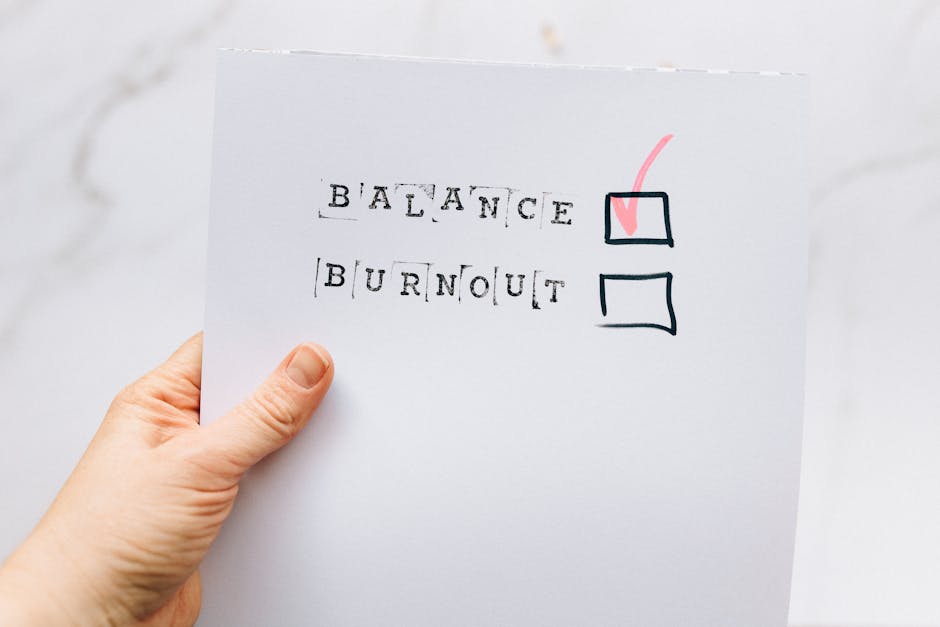
The "Tuesday at 3 PM" Test
When I talk about "visual awareness," I’m not talking about mood boards. I’m talking about the ability to look at a chaotic street scene, a spreadsheet, or a complex human interaction and identify the structural truth underneath.
If you are constantly interrupted by notifications, your brain never enters the "diffuse" mode required to synthesize data. When your phone pings, you aren't just losing seconds; you are losing the neural thread that helps you connect the dots between seemingly unrelated ideas. If an app is too noisy, if it demands your attention with red dots and push alerts, it is fundamentally incompatible with the deep work required to build a pattern-seeing eye. Delete it. Yes, right now. I just deleted a weather app mid-sentence because it gave me a "severe weather alert" for a light drizzle. It’s noise. It’s gone.
Building Rituals as a Bridge to Focus
Wellness in a creative culture isn't about expensive smoothies or quarterly retreats. It’s about creating a physiological environment where your brain feels safe enough to be curious. Burnout isn't just "tiredness"; it’s the result of your nervous system being in a state of chronic alarm due to constant digital bombardment.
Rituals act as a bridge—a transition state that tells your brain, "We are leaving the reactive zone and entering the observational zone." These don't need to be grand gestures. Keep them under two minutes. Anything longer is just another item on your to-do list.
Tiny Rituals for Visual Clarity
- The Analog Reset: When you feel your eyes blurring at the screen, stand up and look at the furthest point in the room. Focus on the texture of a wall or the way light hits a plant for 60 seconds. Do not reach for your phone. The Commuter’s Edit: If you travel, pick one detail each day to observe. "Today, I am only looking for the color red in the architecture." This forces your brain to filter out the noise and prioritize specific visual input. The Silence Check: Before you open a laptop, spend 90 seconds in absolute silence. No music, no podcasts, no "ambient work sounds." Just you and the hum of the world.
Observation Habits: The Difference Between Reactive and Proactive
Most of us treat the world as something to be "gotten through." To train your eye, you must change your relationship to your environment. We need to shift from *reactive*—where we respond to every notification and trend—to *proactive*, where we gather data for our own internal library.
Feature Reactive Observer Proactive Observer Input Source Social media feeds / Notifications Real-world environments / Architecture / Human behavior Mental State Anxious, scattered, "keeping up" Calm, deliberate, curious Pattern Recognition Mimics popular trends Finds structural connections End Goal Validation / "Likes" Understanding / Creative synthesisWhy "Wellness" is Essential for Pattern Recognition
You cannot see patterns if you are perpetually exhausted. I have no patience for productivity advice that ignores sleep. If you are operating on five hours of sleep, your brain is physically incapable of high-level pattern recognition. You are functioning in "survival mode," and in survival mode, your brain ignores nuance to focus on immediate threats.
If you want to train your eye, you have to prioritize recovery as a creative discipline. Burnout recovery isn't just "taking a break"; it’s about restoring the bandwidth required to do deep, meaningful work. When you are rested, you stop seeing the world as a series of obstacles and start seeing it as a series of opportunities.
The Practice of "Seeing"
Training your eye is a practice of subtraction. We are constantly inundated with so much visual data that the brain eventually turns down the volume on everything to cope. By removing the noise—deleting the apps, silencing the notifications, and committing to these tiny, two-minute rituals—you are turning the volume back up.
How to Start Today
Perform a Digital Audit: Look at your phone’s screen time. Which apps are "noisy"? Delete at least two of them today. Don't worry, they'll still be there if you need them—but you probably won't. Practice Daily Stillness: Use the 90-second silence ritual before starting a project. It acts as a cognitive palate cleanser. Keep a Physical Log: Carry a small notebook. When you see a pattern (a recurring shape in nature, a recurring behavior in your office, a linguistic shift in a book), write it down. Do not take a photo. Writing engages the brain in a way that capturing an image does not.The Tuesday 3 PM Truth
Back to our Tuesday afternoon. If you’ve followed this, you aren't staring at your inbox, waiting for the dopamine hit of a "ding." You’ve practiced your observation habits. You’ve allowed yourself to be bored. It is in that boredom—in that quiet, un-monetized space—that the real patterns emerge.
Creativity is not some random magic bestowed upon the lucky few. It is the result of focused, deliberate observation. It is the ability to clear away the clutter until only the structure remains. Stop letting the algorithms dictate your visual diet. Take control of your gaze. Your work—and your nervous system—will thank you for it.

Now, go shut down your notifications. You have patterns to find.